
Hunger, or food scarcity, is one of the most pressing issues in the world today, but it’s hard to pinpoint its cause and how to remedy it. The world’s farmers are producing more food than ever before, and the amount of food per capita is also at an all-time high. Despite this, the problem of food scarcity is increasing as many people, especially in developing countries, do not have access to a reliable food supply. From a social science perspective, the amount of food isn’t the problem, rather the way the food is distributed and who can access it. Income, gender and class stratification allocate food to those who are deemed most worthy. This can be seen especially in third-world countries where there is little protection for the underprivileged.
The issue of food scarcity can be attributed to other factors as well. A statistic was cited in the article, stating that the amount of corn used to make enough ethanol to fill an SUV’s fuel tank could feed one person for an entire year. While I have my doubts about the actual validity of that figure, it brings about an important point. Much of the corn and other crops produced go into fuel production, not directly to humans, causing conflicts between competing interests. Finally, many countries are nearly entirely dependent on imports for their food supply. There are many reasons for this, including lack of agricultural knowledge and infrastructure. The only way to make these countries self sufficient is to give them the tools and knowledge to help themselves.
Before fingers are pointed and blame is placed, it is important to remember a few key things. Farmers produce for a perfectly competitive market, meaning they are price-takers, not price makers and most often have little control over where their crops are sold and how they are used. They cannot be blamed for world hunger. The long term solution is to strengthen the agricultural economies of developing countries and help them transition from subsistence farming to the large-scale type which will have the ability to feed that nation and generate income. Projects such as these are already underway in places such as Afghanistan where the US military is working to help farmers escape pressure from the Taliban to grow opium poppies and instead grow legal food crops. These types of projects are what may have potential to begin to alleviate the problem of world hunger.
Discussion questions:
At what level should the problem of hunger be addressed? On an individual basis, by country?
Whose responsibility is it to alleviate world hunger?
What does expansion of world agricultural markets do to the US agricultural sector?
Examples of US work to rebuid Afghan ag:
'Guard Farmers' join counterinsurgency fight in Afghanistan
USAID Afghanistan: From Opium to Onions
Wednesday, April 21, 2010

Monday, April 12, 2010
Reading response: "Sweet Charity" by Janet Poppendeick
This week’s readings addressed the problem of poverty and hunger and the underlying causes of these issues. According to Poppendieck and data compiled by Second Harvest, the majority of people using food banks, soup kitchens and other food assistance programs are female and/or elderly and are often a racial minority. However due to economic cycles and widespread structural unemployment, it is becoming more common to see entire families looking for handouts and eating at soup kitchens. This is especially prevalent in areas that have been hit by the loss of a specific industry, such as the Iron Belt which was crippled by the recent downturn of the auto industry. In nearly all cases, the people assisted fall below the poverty line. This threshold is defined as the ability or inability to spend no more than one-third of your income to purchase nutritionally adequate food. Very few people spend that much of their income on food, so the standard is somewhat out-of-date.
Food banks, soup kitchens and similar assistance programs arose out of need. In previous times, a person or family needing help would turn to their church for assistance. Others would look to their neighbor, as sharing of resources was far more common, especially in rural, agricultural communities. Because such options are not as readily available now, assistance programs have been implemented.
The Social Constructionist view of hunger defines it as a societal problem, not simply a personal one that is caused by laziness, lack of motivation, etc. Hunger is instead seen as a symptom of a larger problem and is also used to project an image of the problem to all of society.
One thing that really caught my attention was the example of the abuse of food stamps. While the system is not perfect and never can be, there should be a way to prevent the misuse of food stamps in order for a person to purchase things such as liquor and cigarettes. In addition, I feel that unhealthy processed foods should be barred from the food stamp and other assistance programs. Instead, only allowing use of food stamps to purchase staples such as flour, pasta, beans, powdered milk, etc would encourage healthier eating habits and reduce health care costs that would likely fall to taxpayers anyway. It is not that difficult to cook healthy (and good) meals with a few basic ingredients, it just takes a little initiative and the desire to help yourself not depend on other people.
Discussion questions:
How could the food assistance program be revamped to prevent abuse of the system?
How has public perception of food assistance programs changed in the past few years, especially in light of the current economic situation?
Food banks, soup kitchens and similar assistance programs arose out of need. In previous times, a person or family needing help would turn to their church for assistance. Others would look to their neighbor, as sharing of resources was far more common, especially in rural, agricultural communities. Because such options are not as readily available now, assistance programs have been implemented.
The Social Constructionist view of hunger defines it as a societal problem, not simply a personal one that is caused by laziness, lack of motivation, etc. Hunger is instead seen as a symptom of a larger problem and is also used to project an image of the problem to all of society.
One thing that really caught my attention was the example of the abuse of food stamps. While the system is not perfect and never can be, there should be a way to prevent the misuse of food stamps in order for a person to purchase things such as liquor and cigarettes. In addition, I feel that unhealthy processed foods should be barred from the food stamp and other assistance programs. Instead, only allowing use of food stamps to purchase staples such as flour, pasta, beans, powdered milk, etc would encourage healthier eating habits and reduce health care costs that would likely fall to taxpayers anyway. It is not that difficult to cook healthy (and good) meals with a few basic ingredients, it just takes a little initiative and the desire to help yourself not depend on other people.
Discussion questions:
How could the food assistance program be revamped to prevent abuse of the system?
How has public perception of food assistance programs changed in the past few years, especially in light of the current economic situation?
Sunday, April 4, 2010
Reading response: “The McDonaldization of Society” George Ritzer
This article, written by George Ritzer, presents McDonalds and the efficiency associated with fast food production as a component of sociological change. Presented in this context, the fast food giant is a metaphor for the rationalization of society. In other words, we are becoming more concerned about speed, ease and efficiency of food preparation than we are about taste, nutrition and actually sitting down to a meal. Ritzer defines rationalization as a process in which a great deal of emphasis is placed on finding the fastest or most optimum means to an end. He includes a number of examples of rationalization in both history and the modern world. One of these is the example of a camping trip. In the past, camping involved a certain amount of unpredicatability. It could rain, your tent could leak, a bear could raid your campsite, you might need to go in the woods, it was an adventure. Now, you can pull your 40’ RV into a paved campsite, hook up to water and electricity, and essentially remove all the uncertainty from the trip. Ritzer grants that there are still people that pitch their tents in the middle of nowhere with the bears, just as there are still people who cook from scratch, but as a whole, the rationalization or “McDonaldization” of society is a rapidly growing trend.
This trend is not only rapidly overtaking society, but is also causing a number of changes outside of diet. At home, I was always fortunate to sit down to a home-cooked meal nearly every night. And it was a real home-cooked meal, not something simply reheated or rehydrated. This also led to family bonding time, discussions that revolved around various topics, usually controversial, and in general, led us to appreciate the food we were eating and the company we were with. Even more importantly, it led to a strong sense of family and values. While I feel that the McDonaldization of society, at least in terms of fast food, is partially responsible for the unhealthy eating habits of today, I also firmly believe that it has at least some small role in the erosion of family values. Rationalization and efficiency is extremely important, especially in terms of feeding our ever-growing population, however it shouldn’t be consuming our lives.
Questions:
What are some of the benefits of increased rationalization of society?
What affects does this trend have on less-developed societies?
This trend is not only rapidly overtaking society, but is also causing a number of changes outside of diet. At home, I was always fortunate to sit down to a home-cooked meal nearly every night. And it was a real home-cooked meal, not something simply reheated or rehydrated. This also led to family bonding time, discussions that revolved around various topics, usually controversial, and in general, led us to appreciate the food we were eating and the company we were with. Even more importantly, it led to a strong sense of family and values. While I feel that the McDonaldization of society, at least in terms of fast food, is partially responsible for the unhealthy eating habits of today, I also firmly believe that it has at least some small role in the erosion of family values. Rationalization and efficiency is extremely important, especially in terms of feeding our ever-growing population, however it shouldn’t be consuming our lives.
Questions:
What are some of the benefits of increased rationalization of society?
What affects does this trend have on less-developed societies?
Wednesday, March 31, 2010
"Ethics of Factory Farms" The Cornell Daily Sun
As the only source of news for many college students, the articles published in the Cornell Daily Sun have a powerful influence, whether you scan the headlines or read every line instead of taking notes during lecture. As such, it was a refreshing to see the dairy industry highlighted in such a positive way in Wednesday's article, "Ethics of factory farms." The article's intention was to provide a perspective that's not often heard by those outside of agriculture, even on the campus of one of the top agricultural institutions in the country. In addition, the piece covered the reactions of animal science students to an ABC special aired in January that was funded by animal rights groups and featured illegally taken undercover videos of some of the less attractive sides of the industry. The special, titled "Got Milk? Got Ethics? Animal rights v. the U.S. dairy industry", was produced mainly from videos taken on Willet Dairy, not far from Ithaca, and showed workers engaging in routine practices such as tail docking. To the untrained eye, this may seem like a cruel practice, however it is fairly pain free, and more importantly, prevents much more painful udder infections and helps to ensure milk cleanliness.
A number of my friends are members of the Cornell University Dairy Science Club, aka CUDS, and they told me that the writer for the Daily Sun actually came to a club meeting to gather information for her article. The author had no prior agricultural knowledge, but upon seeing the ABC special, realized that there had to be another side to the story. On another personal note, I met one of the owners of Willet Dairy in an airport on my way back to Ithaca after spring break. I was impressed by his professionalism and had a very interesting discussion on American ag.
Its unfortunate that the story of agriculture is being primarily told by those who wish to abolish it in its current form. Seeing the article in the Sun was a good start, but its time for agriculturists of all kinds to share their experience and help to close the gap between the public and the industry that feeds them. You can do your part too. When you read about agriculture, or anything for that matter, do so with an open mind and remember that there is almost always another side to the story that needs to be heard.
A number of my friends are members of the Cornell University Dairy Science Club, aka CUDS, and they told me that the writer for the Daily Sun actually came to a club meeting to gather information for her article. The author had no prior agricultural knowledge, but upon seeing the ABC special, realized that there had to be another side to the story. On another personal note, I met one of the owners of Willet Dairy in an airport on my way back to Ithaca after spring break. I was impressed by his professionalism and had a very interesting discussion on American ag.
Its unfortunate that the story of agriculture is being primarily told by those who wish to abolish it in its current form. Seeing the article in the Sun was a good start, but its time for agriculturists of all kinds to share their experience and help to close the gap between the public and the industry that feeds them. You can do your part too. When you read about agriculture, or anything for that matter, do so with an open mind and remember that there is almost always another side to the story that needs to be heard.
Tuesday, March 30, 2010
Reading response: "The politics of government dietary advice", Marion Nestle and Jennifer Lisa Falbe
The main focus of this article was on the development of nutritional guidelines by the federal government and the various factors that come into play when establishing the recommendations. The authors provide an overview of the history and importance of nutritional guidelines, particularly the food pyramid developed by the U.S. Department of Agriculture. According to the article, the food guides have been produced since the 1900’s, with the intent of helping Americans overcome nutritional deficiencies. Although these nutritional guidelines are designed to benefit everyone, there is significant controversy over wording, food examples, measurement methods and other aspects. One of the primary reasons for the controversy is pressure from industry-specific special interest groups, each of whom want more of their commodity to be consumed. Because the consumption of food, unlike shoes or clothing, is limited, the pressure to carefully word the guidelines is intense. Instead of saying what not to eat, the guidelines, in particular the USDA food pyramid, say to “limit consumption” of some foods and give a range of amounts for other segments. Also, by encouraging exercise, the guidelines place more of the responsibility on the individual, removing blame from the government and the food companies. Overall, the article gives an interesting take on the various forces that shape the development of nutritional guidelines.
I had never before considered this aspect of nutritional guidelines, although it makes a tremendous amount of sense. Special interest groups have a significant influence on ag and food policy and flex their muscle in a number of different ways. Commodity specific groups, such as wine and grapegrowers’ groups have used public campaigns to promote the benefits, such as antioxidants, that are provided by drinking wine. Various diet-pushers, from Atkins to raw food, have launched entire lines of products along with their promotional campaigns to profit from our obsession with weight. Animal rights and other anti-agriculture groups have made their presence felt as well. By utilizing campaign tactics that elicit strong emotions from the general public, specifically those far removed from the agricultural industry, groups such as the Humane Society of the United States (HSUS) have effectively banned certain practices and even brought about the demise of the California egg industry with the passage of Proposition 2 (American Veterinary Medical Association). While each of these examples is an illustration of free speech, its time for Americans to become better educated about food choices and their impact on health.
I had never before considered this aspect of nutritional guidelines, although it makes a tremendous amount of sense. Special interest groups have a significant influence on ag and food policy and flex their muscle in a number of different ways. Commodity specific groups, such as wine and grapegrowers’ groups have used public campaigns to promote the benefits, such as antioxidants, that are provided by drinking wine. Various diet-pushers, from Atkins to raw food, have launched entire lines of products along with their promotional campaigns to profit from our obsession with weight. Animal rights and other anti-agriculture groups have made their presence felt as well. By utilizing campaign tactics that elicit strong emotions from the general public, specifically those far removed from the agricultural industry, groups such as the Humane Society of the United States (HSUS) have effectively banned certain practices and even brought about the demise of the California egg industry with the passage of Proposition 2 (American Veterinary Medical Association). While each of these examples is an illustration of free speech, its time for Americans to become better educated about food choices and their impact on health.
Monday, March 8, 2010
Reading Response: "Eating American" by Sidney Mintz
When you think of American food, what comes to mind? Hamburgers, BBQ, maybe the ubiquitous apple pie? Or is it the entrees on the “American” menu at most ethnic restaurants? Or do we really have a truly American cuisine?
This is the question posed by Sidney Mintz’s essay, titled “Eating American.” It addresses whether or not we really do have an American cuisine, which directly relates to the presence of an American culture. Conversely, she asks if we are just a conglomerate of cultures, cuisines and lifestyles. This arguably is the culture and cuisine of this country, as we are a melting pot of immigrants, refugees, etc.
Some traditions however, must be considered American. Texas Barbeque, Cajun cuisine, Manhattan clam chowder all identify to a specific region and are a direct reflection on the culture and resources of that area. The food also has a deeper meaning. Through trying the cuisines of other cultures, we gain a deeper appreciation and understanding of that group, and are united by a common desire and need for good taste and nutrition. Food is often associated with a particular lifestyle or event. Even certain restaurants can be associated with a particular way of life. There is a stereotype, not necessarily negative, with Starbucks or KFC customers. Is this just part of our culture as Americans, or a reflection on the diversity of our country?
Discussion questions:
What do you think is considered “American” cuisine by other cultures?
Do you think that that adaptation of other cooking styles, dishes, etc can be considered part of our culture?
Monday, March 1, 2010
Reading response: "The Other Other White Meat"
To someone with a livestock background, its easy to imagine the benefits of cloning. Artificial insemination revolutionized the industry, allowing producers to access the best genetics in the world. Rather than transporting a bull (or boar, stallion, etc), cryogenically frozen semen can be stored in liquid nitrogen tanks and shipped around the world. Not only is this far more efficient and economically feasible, especially for smaller producers, but allows for the selection of the very best animals, improving herds at a much faster rate than would be possible with traditional breeding.
A similar practice, embryo transfer, involves the implantation of frozen embryos into donor cows, which are essentially surrogate mothers. The very best cows, typically those who have excelled at livestock shows or have superb production records, are flushed for embryos. Through traditional breeding, a cow can only have one calf per year, and has typically reached the end of her production by about 6 or 7 years of age. Embryo harvest allows for many more offspring than a cow could produce traditionally.
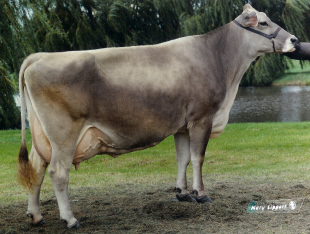
AI and ET have changed the face of the livestock industry, helping producers to breed stronger, higher producing, longer lived animals. It’s only natural that the next step involve cloning. Breeding, regardless of its done via a straw or a stud, leaves plenty to chance. Cloning eliminates this uncertainty. The animal is the same genetically and physically. This includes any products from a cloned animal, i.e. milk, meat, etc.
Cloning is not without disadvantages, however. Through breeding, producers are constantly trying to improve on the previous generation, rather than make identical copies. Cloned animals simply stop this evolution. In addition, recessive traits can cause issues when cloned animals are bred, especially if they are closely linked genetically. This is similar to the practice of line breeding, which is effective but must be closely monitored. As with all science, there are advantages and disadvantages, but the most important thing is to keep moving forward.
Discussion questions
Is the public’s rejection of cloned animals an issue of health or ideology?
Would you be comfortable eating meat or milk from a cloned animal?
Subscribe to:
Posts (Atom)