
As the only source of news for many college students, the articles published in the Cornell Daily Sun have a powerful influence, whether you scan the headlines or read every line instead of taking notes during lecture. As such, it was a refreshing to see the dairy industry highlighted in such a positive way in Wednesday's article, "Ethics of factory farms." The article's intention was to provide a perspective that's not often heard by those outside of agriculture, even on the campus of one of the top agricultural institutions in the country. In addition, the piece covered the reactions of animal science students to an ABC special aired in January that was funded by animal rights groups and featured illegally taken undercover videos of some of the less attractive sides of the industry. The special, titled "Got Milk? Got Ethics? Animal rights v. the U.S. dairy industry", was produced mainly from videos taken on Willet Dairy, not far from Ithaca, and showed workers engaging in routine practices such as tail docking. To the untrained eye, this may seem like a cruel practice, however it is fairly pain free, and more importantly, prevents much more painful udder infections and helps to ensure milk cleanliness.
A number of my friends are members of the Cornell University Dairy Science Club, aka CUDS, and they told me that the writer for the Daily Sun actually came to a club meeting to gather information for her article. The author had no prior agricultural knowledge, but upon seeing the ABC special, realized that there had to be another side to the story. On another personal note, I met one of the owners of Willet Dairy in an airport on my way back to Ithaca after spring break. I was impressed by his professionalism and had a very interesting discussion on American ag.
Its unfortunate that the story of agriculture is being primarily told by those who wish to abolish it in its current form. Seeing the article in the Sun was a good start, but its time for agriculturists of all kinds to share their experience and help to close the gap between the public and the industry that feeds them. You can do your part too. When you read about agriculture, or anything for that matter, do so with an open mind and remember that there is almost always another side to the story that needs to be heard.
Wednesday, March 31, 2010

Tuesday, March 30, 2010
Reading response: "The politics of government dietary advice", Marion Nestle and Jennifer Lisa Falbe
The main focus of this article was on the development of nutritional guidelines by the federal government and the various factors that come into play when establishing the recommendations. The authors provide an overview of the history and importance of nutritional guidelines, particularly the food pyramid developed by the U.S. Department of Agriculture. According to the article, the food guides have been produced since the 1900’s, with the intent of helping Americans overcome nutritional deficiencies. Although these nutritional guidelines are designed to benefit everyone, there is significant controversy over wording, food examples, measurement methods and other aspects. One of the primary reasons for the controversy is pressure from industry-specific special interest groups, each of whom want more of their commodity to be consumed. Because the consumption of food, unlike shoes or clothing, is limited, the pressure to carefully word the guidelines is intense. Instead of saying what not to eat, the guidelines, in particular the USDA food pyramid, say to “limit consumption” of some foods and give a range of amounts for other segments. Also, by encouraging exercise, the guidelines place more of the responsibility on the individual, removing blame from the government and the food companies. Overall, the article gives an interesting take on the various forces that shape the development of nutritional guidelines.
I had never before considered this aspect of nutritional guidelines, although it makes a tremendous amount of sense. Special interest groups have a significant influence on ag and food policy and flex their muscle in a number of different ways. Commodity specific groups, such as wine and grapegrowers’ groups have used public campaigns to promote the benefits, such as antioxidants, that are provided by drinking wine. Various diet-pushers, from Atkins to raw food, have launched entire lines of products along with their promotional campaigns to profit from our obsession with weight. Animal rights and other anti-agriculture groups have made their presence felt as well. By utilizing campaign tactics that elicit strong emotions from the general public, specifically those far removed from the agricultural industry, groups such as the Humane Society of the United States (HSUS) have effectively banned certain practices and even brought about the demise of the California egg industry with the passage of Proposition 2 (American Veterinary Medical Association). While each of these examples is an illustration of free speech, its time for Americans to become better educated about food choices and their impact on health.
I had never before considered this aspect of nutritional guidelines, although it makes a tremendous amount of sense. Special interest groups have a significant influence on ag and food policy and flex their muscle in a number of different ways. Commodity specific groups, such as wine and grapegrowers’ groups have used public campaigns to promote the benefits, such as antioxidants, that are provided by drinking wine. Various diet-pushers, from Atkins to raw food, have launched entire lines of products along with their promotional campaigns to profit from our obsession with weight. Animal rights and other anti-agriculture groups have made their presence felt as well. By utilizing campaign tactics that elicit strong emotions from the general public, specifically those far removed from the agricultural industry, groups such as the Humane Society of the United States (HSUS) have effectively banned certain practices and even brought about the demise of the California egg industry with the passage of Proposition 2 (American Veterinary Medical Association). While each of these examples is an illustration of free speech, its time for Americans to become better educated about food choices and their impact on health.
Monday, March 8, 2010
Reading Response: "Eating American" by Sidney Mintz
When you think of American food, what comes to mind? Hamburgers, BBQ, maybe the ubiquitous apple pie? Or is it the entrees on the “American” menu at most ethnic restaurants? Or do we really have a truly American cuisine?
This is the question posed by Sidney Mintz’s essay, titled “Eating American.” It addresses whether or not we really do have an American cuisine, which directly relates to the presence of an American culture. Conversely, she asks if we are just a conglomerate of cultures, cuisines and lifestyles. This arguably is the culture and cuisine of this country, as we are a melting pot of immigrants, refugees, etc.
Some traditions however, must be considered American. Texas Barbeque, Cajun cuisine, Manhattan clam chowder all identify to a specific region and are a direct reflection on the culture and resources of that area. The food also has a deeper meaning. Through trying the cuisines of other cultures, we gain a deeper appreciation and understanding of that group, and are united by a common desire and need for good taste and nutrition. Food is often associated with a particular lifestyle or event. Even certain restaurants can be associated with a particular way of life. There is a stereotype, not necessarily negative, with Starbucks or KFC customers. Is this just part of our culture as Americans, or a reflection on the diversity of our country?
Discussion questions:
What do you think is considered “American” cuisine by other cultures?
Do you think that that adaptation of other cooking styles, dishes, etc can be considered part of our culture?
Monday, March 1, 2010
Reading response: "The Other Other White Meat"
To someone with a livestock background, its easy to imagine the benefits of cloning. Artificial insemination revolutionized the industry, allowing producers to access the best genetics in the world. Rather than transporting a bull (or boar, stallion, etc), cryogenically frozen semen can be stored in liquid nitrogen tanks and shipped around the world. Not only is this far more efficient and economically feasible, especially for smaller producers, but allows for the selection of the very best animals, improving herds at a much faster rate than would be possible with traditional breeding.
A similar practice, embryo transfer, involves the implantation of frozen embryos into donor cows, which are essentially surrogate mothers. The very best cows, typically those who have excelled at livestock shows or have superb production records, are flushed for embryos. Through traditional breeding, a cow can only have one calf per year, and has typically reached the end of her production by about 6 or 7 years of age. Embryo harvest allows for many more offspring than a cow could produce traditionally.
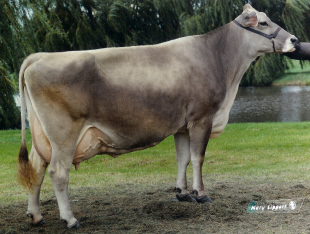
AI and ET have changed the face of the livestock industry, helping producers to breed stronger, higher producing, longer lived animals. It’s only natural that the next step involve cloning. Breeding, regardless of its done via a straw or a stud, leaves plenty to chance. Cloning eliminates this uncertainty. The animal is the same genetically and physically. This includes any products from a cloned animal, i.e. milk, meat, etc.
Cloning is not without disadvantages, however. Through breeding, producers are constantly trying to improve on the previous generation, rather than make identical copies. Cloned animals simply stop this evolution. In addition, recessive traits can cause issues when cloned animals are bred, especially if they are closely linked genetically. This is similar to the practice of line breeding, which is effective but must be closely monitored. As with all science, there are advantages and disadvantages, but the most important thing is to keep moving forward.
Discussion questions
Is the public’s rejection of cloned animals an issue of health or ideology?
Would you be comfortable eating meat or milk from a cloned animal?
Wednesday, February 24, 2010
Reading response: "The swine flu crisis lays bare the meat industry's monstrous power"
Whoa. I didn’t know that the mission of agriculture was to kill people by infecting them with virulent diseases. Sarcasm aside, Davis’s article, which contained a few valid points, accused animal agriculture of being a hotbed of disease and devastation. The article however, has very little basis in fact. “Probably conceived in the fecal mire of an industrial pigsty (Davis, 2009)”?? H1N1, deemed “Swine Flu” by the media, dealt a crippling blow to the already struggling pork industry. As Davis points out, H1N1 is a hybrid virus, containing genes of swine, bird and human flus. Swine Flu is an actual virus, and is feared greatly by hog growers. While the actual disease is only fatal in about ten percent of affected hogs, it can often manifest into more serious infections. Nearly all producers take steps to prevent Swine Flu and the complications that arise from it.
Contrary to popular belief, humans cannot get H1N1 from exposure to hogs or from eating pork products, however they can transmit the disease to swine. Last summer and fall, visitors at fairs and livestock shows were asked to keep out of areas where show pigs were being housed in order to protect the animals.
I’ll grant that this article was written early on in the H1N1 scare, however its news stories like this that give animal agriculture a bad name that it most certainly does not deserve.
Discussion questions:
Each year, a different strain of the common flu kills millions of people. H1N1 has not lived up to the hype it was originally given, and is not nearly as threatening. What is your opinion of the handling of the H1N1 situation by the media, government and general public?
We all saw the images of people wearing dust masks in hopes of protecting themselves from H1N1. What caused the mass panic and what does that say about our propensity to believe everything we are told?
Sunday, February 21, 2010
E.Coli path shows flaws in beef inspection
We often don’t realize how lucky we are. As Americans, we are fortunate to have the safest food system in the world and spend less of our disposable income on food than citizens in any other country. When something does go wrong, people are alerted and problem-solving action is immediately taken. E. Coli is a product of nature, and unfortunately, will affect people if they are careless when exposed to the bacteria. Ms. Smith, of the NY Times article was one of those unfortunate people, and as a result, one of the largest companies in the agricultural industry has been forced to take the blame. While the article does expose some important truths, such as the need for more careful testing of inputs, it’s also necessary to read this with a grain of salt. If you’ve never seen a meat-processing facility for yourself, don’t base your judgment of the industry on sensational reporting. Most cutting-room floors are literally clean enough to eat off of. And as for hamburgers being composed of feces-tainted meat, carcasses in all USDA inspected facilities; the only ones that can process meat for selling to the public, are handled in a manner that reduces the potential for contact with the hide and hair of the animal. Its also important to realize that the meatpacking industry has a vested interest in keeping its products clean and you healthy; any E.Coli scare is going to reduce meat consumption and thus profits, therefore you can rest assured that your best interest is on everyone’s minds.
Discussion questions
Who should have the responsibility in a case of poor handling on the part of the consumer?
Compare a large modern packing plant to Joel Salatin’s open air killing shed. What are the advantages and disadvantages of each?
Saturday, February 13, 2010
The Omnivore’s Dilemma, Ch. 17
Why do humans feel guilty when they eat meat? We are, after all, animals, more specifically; omnivores for whom meat played a crucial role in evolution. In this chapter, Pollan explores the ethical questions that arise from meat consumption. Since our existence as a species, humans have been hunting. Many people now consider this tradition to be barbaric, regardless of the fact that nearly all hunters are on a quest for meat, not killing for sport. What’s changed? Pollan also raises the question of the different treatment received by pets and livestock. According to his book, 50 percent of dogs in America will receive a Christmas gift, while most hogs, animals that are just as or perhaps more intelligent than pigs, become the holiday ham. Personally, I don’t understand why the dog is treated as a human equivalent, when the role of the dog and pig could be easily reversed. I’ll admit this is an extreme view, and I’d never consider eating my own dog, but it’s a reasonable question.
Another portion of the chapter is dedicated to the argument that by consuming meat of other animals, humans are being speciest. The only way to overcome this distinction is to give up meat, or consume all animals equally, including humans. Assuming that the vegetarian movement wins, what then happens to domestic animals? Swine, cattle and all manner of livestock depend on meat consumption for the survival of the species. The cultural, ethical and scientific aspects of meat consumption are all examined in this chapter, raising some interesting questions.
Discussion questions:
Slaughterhouses are designed to be as clean and humane as possible. Pollan even provides an example of one that lets visitors see the killing floor. Would you prefer to see the process for yourself, or ignore the unpleasant details of processing meat?
Suppose the world stopped consuming meat. How would our bodies adapt to a plant-based diet in terms of both physical structure and chemical composition? Also, how do we utilize the land for which grazing is the only logical method of getting energy?
Check out this link:http://www.grandin.com/inc/animals.in.translation.html
Subscribe to:
Posts (Atom)